
Introducing Story About Story
What is a story, anyway?

Have you ever used a metaphor to explain a difficult concept to someone else, or perhaps to yourself? We all have, right?
A metaphor is actually just another name for a story. More specifically, a story about another story.
You might be tempted to think that this is not true. After all, most metaphors we employ on a regular basis can be verbalized in one sentence—sometimes just one phrase. For example, I might say that it is “raining cats and dogs” outside, and 99% of the time, this is generally understood not to be a literal description of the weather. But can this metaphor actually be considered a story?
To answer that question, we need to answer a more fundamental one.
What is story?
Most people might argue that a story is simply an account of events. First this thing happened, then that, then something else. In other words, we could see a story as a series of events arranged on a timeline. But this begs the question—could a story be a series of details organized in a linear fashion on some other dimension, instead of time?
For example, in the buffet we have chicken on the left, mashed potatoes in the middle, and veggies at the end. Is that a story?

Of course, in order to tell that story, I have to guide you from the chicken to the potatoes to the veggies, not just along a linear spatial dimension, but along a linear temporal one as well. If we try to eliminate time completely from our formulation, I imagine you would be permanently fixed in front of just one item in the buffet. (And if that constitutes a story, I think we’ve muddied the definition of the word to the point of being too generic and all-encompassing to be useful.) As soon as we admit to a linear connection among the different dishes in the buffet, we have created a temporal dimension, because the act of describing these spatial dimensions of the buffet is an act of thinking about it, and we do our thinking within a temporal context. So it may be that for two-dimensional creatures living in a three-dimensional world, where the third dimension is considered time instead of the fourth, it may be entirely possible to tell a story with only three dimensions. But for three-dimensional creatures such as ourselves, I am rather inclined to believe that it is impossible for us to tell a story without four.
Suppose for a moment that you were a three-dimensional creature living in a three-dimensional world. There would be no time. You would be an eternal being. Nothing would ever change. And hence, there would be no story.
So what we find is that the key ingredient of story is change. And in order for change to take place, we must have at least one dimension where our sight is limited to successive cross-sections. You can consider the metaphor of a VHS tape here—your television will only ever display one frame at a time. If the television were to display all of the frames at once, it would be a muddy mess to behold. The VHS tape only makes sense when you (metaphorically speaking) chop it up into pieces and arrange them on a dimension that you can’t see all at once. That is perhaps the definition of a temporal dimension—a dimension you can’t see all at once.
Of course, we could argue that we can’t see everything in a spatial dimension either. True. But in a temporal dimension, you see nothing but an infinitesimally small cross-section we refer to as a moment. In a spatial dimension, you see quite a bit more in each direction. If you were standing at the beginning of a hallway with many, many paintings lining the walls, even if you could see multiple paintings at once, you inevitably would have to narrow your focus to just one painting at a time to be able to comprehend the stories they were trying to tell. In other words, even if you can see multiple paintings at once in your three-dimensional spatial environment, you still have to organize your focus and your thoughts along a temporal dimension in order to truly understand. You are effectively chopping up your three-dimensional environment and arranging the pieces along a fourth dimension with your mind.
What is interesting about this is that greater understanding comes not from seeing more, but seeing less. Can you imagine seeing every word of a book at once? Inevitably, you will move your eyes to the first word, and then to the next—but what if you couldn’t? What if you could only see the whole book at once? You would immediately lose a sense of story.
Imagine a beautiful symphony by Beethoven or Vivaldi. Now imagine if you heard every note at once. Would it mean anything at all anymore?
What we discover is that in order to find meaning in the universe, we must not see all of it. We must only see in part. How ironic it is that we so often say we want to know the meaning of life, and think we would if we saw everything!
I may be making a bold proposition—call it a story about story, perhaps—but what if the reason we find ourselves in this bizarre predicament called life—namely, a state of living in a world where answers seem elusive, where ultimate meaning seems impossible to comprehend, and where confusion abounds—is specifically because that is actually the best way to find meaning in the first place? What if the universe, like a VHS tape, is not intended to be seen all at once? What if we see reality in little bits and pieces, slivers here and there, because it is actually the very best thing for us? I don’t know that we can know that for sure, and we may be making an assumption that risks being more theological than philosophical—but it does seem like a story worth telling. Because it is a story that gives hope and meaning to our messy, confusing, half-blind existence. And those are the kind of stories we need to be able to sail troubled waters.
This is what Story About Story is about. We’re exploring the dimension of story—the meaning we find only when the music is in progress, when we see little and love much. And my hope is that as we search for the deeper meaning behind the stories we see, tell, and experience in our lives, we will find greater possibilities and greater hope.
So how, specifically, are we going to do this?
By telling stories about story—by using metaphor.
One of the greatest ways we can possibly make sense of our existence—perhaps the only way to truly make sense of our existence—is with story. And when our existence is confusing and messy, trying to find a story in it can be terribly challenging. If we go back to our art gallery from earlier, even if our perspective is limited to only one painting at a time, what do we do when we encounter a painting that looks like the colored static that appears on an old TV screen when the signal is lost? Life is incredibly complicated and abstruse. It’s a bit like being handed the most ridiculously elaborate dot-to-dot puzzle of all time, except that there are no numbers on the sheet to tell you which dot to connect to which. We are finite humans with finite knowledge, trying to make sense of a world with few answers. And inevitably, we find ourselves trying to make connections among the dots, but how do we really know which ones go together?
This is where metaphor comes in. We might, after staring at the dots on the page for a while, find ourselves thinking it looks like it could be an elephant. But it’s not an elephant. It’s a mass of dots on a page. The elephant is a story in our own mind that we are telling about the story—or lack thereof—that we find on the page. A metaphor is still useful though. It helps bring understanding where there is none. It helps bring order to chaos, even if it is not literally true. And the reason this works is because a metaphor is less concerned with the facts, and more with the relationships among those facts.

If we say it’s raining cats and dogs, we’re telling a story in shorthand about what our reaction would be to being caught outside when something so heavy and bruising as a Labrador came hurtling down on top of us. And then we’re removing all of the facts—the dots in the dot-to-dot puzzle, or the Labrador and our own selves caught outside—and taking the remaining lines—the relationships—and placing those lines upon the actual dot-to-dot puzzle of our existence. We’re saying the rain, and whoever is caught in it, exists in a similar relationship. Those relationships create understanding and meaning, precisely because relationship is meaning.
Remember our symphony from before? A symphony is not a collection of notes. It is a collection of notes that exist in relationship with each other. When the relationship between the notes is destroyed, the meaning and music is destroyed as well. Another word for relationship is actually dimension. A relationship, or dimension, is the line drawn between two points. A line we must traverse, dance across, sail across—or else the meaning is lost. Meaning is found in the journey. Meaning is found not in objects, but in relationships and inside of ourselves.
Now, back to our dot-to-dot puzzle. It’s all good and well that we would use a metaphor—perhaps an elephant—to bring meaning to the puzzle and lines to the dots. But how do we know we’ve picked the right metaphor? How do we really know that we’re drawing lines in the right places?
We don’t. If there are no numerical labels next to the dots telling us how the lines go together, then we can’t really know for sure what the puzzle is “supposed” to look like. We’re a bit like the blind men and the elephant. We grab on to the trunk of the elephant, and conclude it is a snake. But a more honest assessment would be to say that it seems like a snake to us. What it actually is we do not know.
Our lives are the same way. So is the universe. We do not know what it actually is. Life itself is a gigantic mystery. And yet, we have experiences within it, and those experiences are relationships and meaning—not lines that are drawn upon a solved coloring book puzzle, but lines we bring to the page ourselves. The lines may not be “correct” in any objective sense (assuming there even is an objective answer key at all), but the lines are real to us, and are therefore worth talking about.
I grew up in a fundamentalist Christian home where we were very sure we had the world figured out, even if we wouldn’t have said it in those terms. I thought my religion gave me an indisputable answer key—a Big Answer that made life meaningful and worth living—and that if everyone had the same answer key I had (and knew how to read it like I did!), the world’s problems would be effectively solved. It was perhaps an understandable position for a young person who had no good reason yet to question the (very small) world he lived in. I believed in my Big Answer without questioning it because there were no questions that needed to be asked.
Inevitably, that wouldn’t last. As an adult I found myself with a crumbling faith and many, many questions that nobody seemed able to answer. Almost overnight, I pivoted from certainty to cluelessness and confusion. But even as I was deconstructing my belief system, I still kept clinging to the same assumption I had held during a more religious chapter of my life—there was a definite answer key, a provable Big Answer that would give meaning to my life, and if I could just flip through enough pages, eventually I would find it. So I kept trying to figure out which lines were the correct ones, and where they should be drawn, so I could solve the dot-to-dot puzzle of life and return to some semblance of certainty. But after years of reading, researching, and deciphering (to the extent possible for an amateur philosopher with an internet connection), I kept coming up short.
There came a point where I realized the puzzle would never be solved. It was a crushing defeat. I sincerely believed that my life was devoid of meaning if I didn’t possess proven knowledge that it was meaningful. But how could that belief be proven either? Even the belief that the world was meaningless was itself a meaning I had chosen to assume!
It is of course impossible to navigate the world without making some kind of assumptions as to its meaning. So if ultimate truth is unknowable, what are we to do?
We have to bring our own meaning to the puzzle. And then, we have to admit honestly that we don’t actually know if we’re right.
As I wrestled with major existential questions and an incurable depression over the years, I found that one of the primary things that kept me afloat were metaphors. I told stories about the world in an attempt to find meaning in the meaninglessness and order in the chaos. At first, I would come up with a hypothesis—perhaps the universe is like this, or perhaps like that—and then I would set out to prove it. But I never could prove anything for sure. All I was left with was a most-likely fictional story.
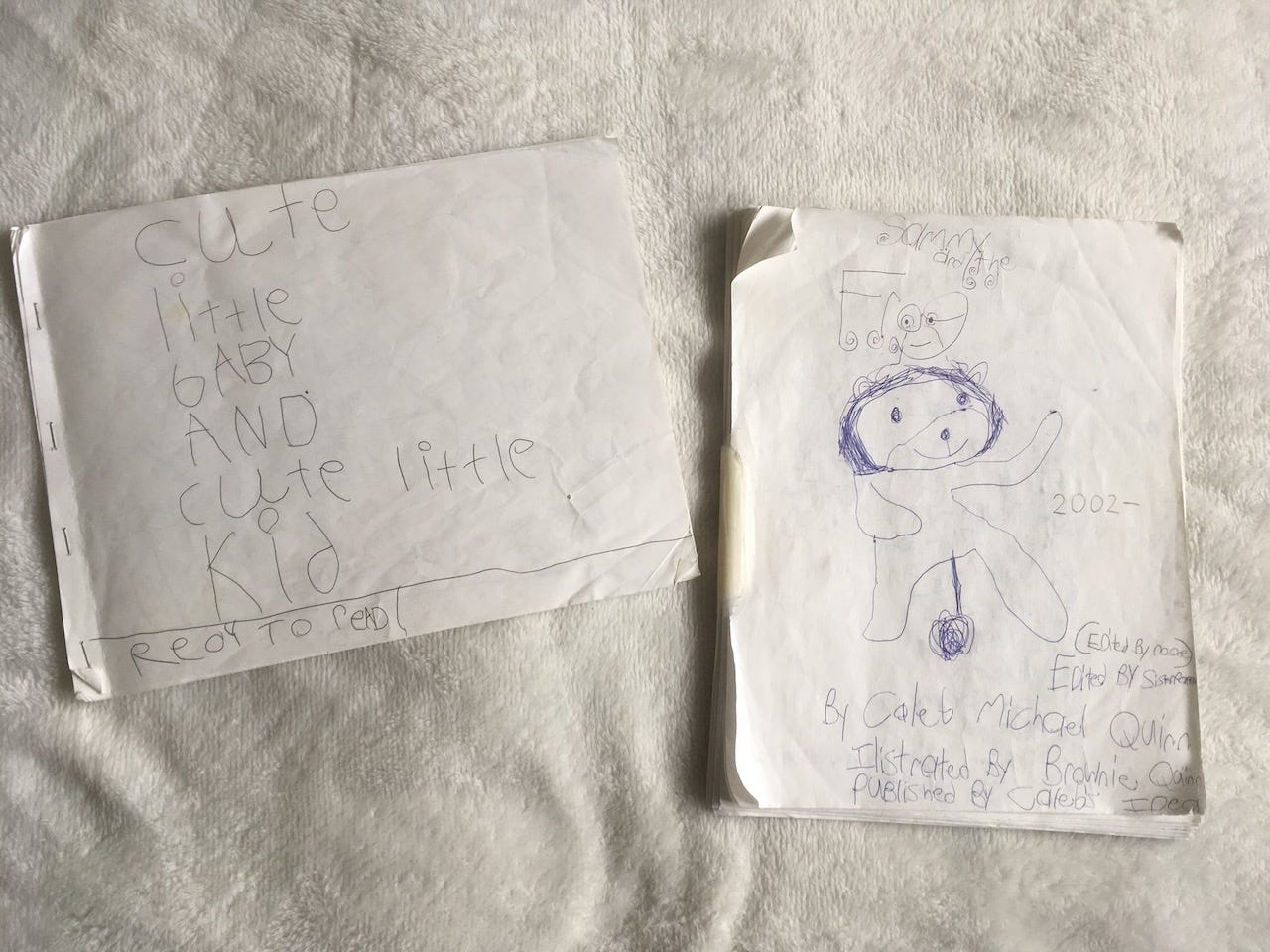
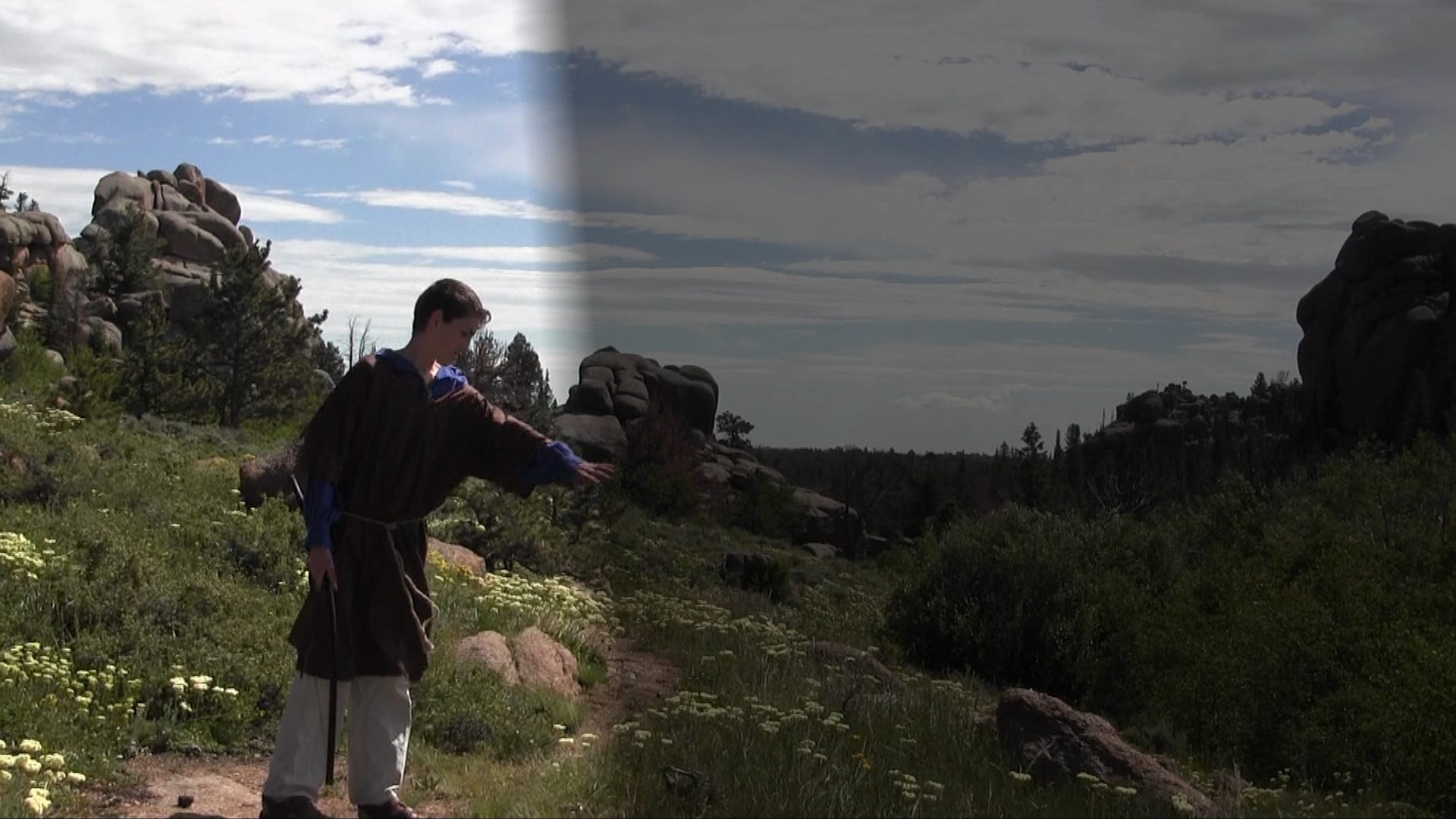
I’ve been writing stories since I was five years old, starting with an endearingly-titled hand-scribbled stapled-together storybook named Cute Little Baby and Cute Little Kid. When people asked me what I wanted to be when I grew up, I always gave them one of two responses—I wanted to own my own Olive Garden (it was my favorite restaurant, and we didn’t have one in my town of residence at the time), and I wanted to be an author. As I grew older, my stories grew with me. In the early days, they became a way to play and have fun. Then as a religious teenager dedicated to the Great Commission, they became my way to tell people about Jesus and the Bible. At that age, I became accustomed to thinking about allegory and metaphor. My brother and a friend and I even teamed up to make a homebrew medieval indie film—complete with sword fights and animated monsters—about the gospel message.
And then I lost my faith, and had the rug pulled out from under my feet. As an adult, storytelling became a way not to evangelize but to hypothesize, a way to ask questions and muse about possible answers, a way to cope with pain. I used metaphors as a way to try to grapple with my existence, and each of these metaphors quickly evolved into a story in my writer’s brain. I began writing and planning dozens of stories, each one designed to help me cope with something different. Strangely enough, my own existential grief turned into a creative explosion unlike anything I had experienced before. But I consistently ran into brick walls when it came to the topic of publishing my stories. How could I share my stories with others if I couldn’t be sure they were rooted in something real? And how could I be sure they were rooted in something real until I had successfully solved the arcane puzzle that lay before me? I needed to figure out the universe first; then I could speak. But I felt more and more self-censored. Because even if I didn’t know for sure if these stories were true in any objective sense, they had become true to me. As every writer knows, our characters can take on a life of their own, and become just as real to us as the actual people in our lives. And not only the characters, but the metaphors had become alive to me. And so I became all the more desperate to prove they were true.
But—I couldn’t. I was a finite creature trying to comprehend the infinite. I was on a quest that was already doomed from the start.
And when I finally realized that, my hopes to finish and share my stories were dashed. I was left with uncertainty instead of answers, doubt instead of faith, and fiction instead of truth.
I didn’t know what to do. So I told more stories. I found ways to personify uncertainty and make it a part of my narrative. I created more metaphors to bring meaning to not just the puzzle, but to the unsolvability of the puzzle. And then I found ways to start living out my own story—even though I didn’t know for sure if it was true.
I no longer see the universe as a puzzle to be solved. I see it as a mystery to explore. And the very act of exploring, seeking, storytelling, is what makes life wonderful and worthwhile. And who knows? Maybe some of our stories will end up being true. I think this gamble might be the very essence of faith.
When I was a fundamentalist, I saw faith as a form of certainty. I thought faith was another word for what facts you believed about the universe. But now I define faith as our response to uncertainty—when we don’t know what’s true, how do we choose to live? Where do we choose to invest our hope? We might not have unquestionable proof that one vessel is the “correct choice” for where to place our faith, but we can choose to follow our nose and we can gamble on what smells of goodness and love. For me, that has looked like embracing the stories I’ve found in my heart, choosing to live as if those stories are blurry reflections of the real.
I’ve finally reached a point in my life where I’m ready to start sharing those stories. These are the stories I’ve written and am still writing to help me find hope in the darkest corners of my life. They mean a lot to me and have helped me immensely. I really hope they are helpful to you too.
As I wrote my stories and realized the themes were connected, I started to see a bigger story forming—a story so immensely beautiful and magical and incomprehensible that it made my heart ache in the best possible way. I don’t know if that story will ever be finished, but I’ve decided to give it a name. Winderverse is a nonlinear story about love. It consists of dozens of stories I’ve invented over the last decade of my life that have gradually grown together. The constituent stories of Winderverse have overlapping characters and themes in many places, often building off of each other and sometimes veering off in a totally new direction. But collectively, they form an overarching narrative about what the meaning of life could be.
The name Winderverse consists of two words put together—winder and verse. Winder is a word I invented to describe that which cannot be described. It is in fact a play on the word wonder—but by using a new word whose definition can never be known for sure, I am attempting to evoke that feeling of wonder and mystery with the word itself. I see winder not as a simple substitute for wonder—I see it as being something much deeper than that, something that engages your whole heart, but cannot be defined or explained without completely ruining it. We’ll talk a lot about winder in Story About Story.
Winderverse has a twofold meaning. One, it is a collection of verse (writings) about winder. Two, it is a universe made of winder. In my stories, the Winderverse is a greater universe that encircles our own. Imagine you look at the universe, and it feels harsh, confusing, and mean. And for simplicity’s sake, let’s imagine it looks something like this:
MEAN
Now imagine that you were able to see past the limits of your own sight; imagine you could see a greater universe surrounding this one, and suddenly the darkness of this world seems different, even though it is still there:
THE MEANING
That’s what a winderverse is. It is a hypothetical greater universe that brings meaning to the meaninglessness of this one.
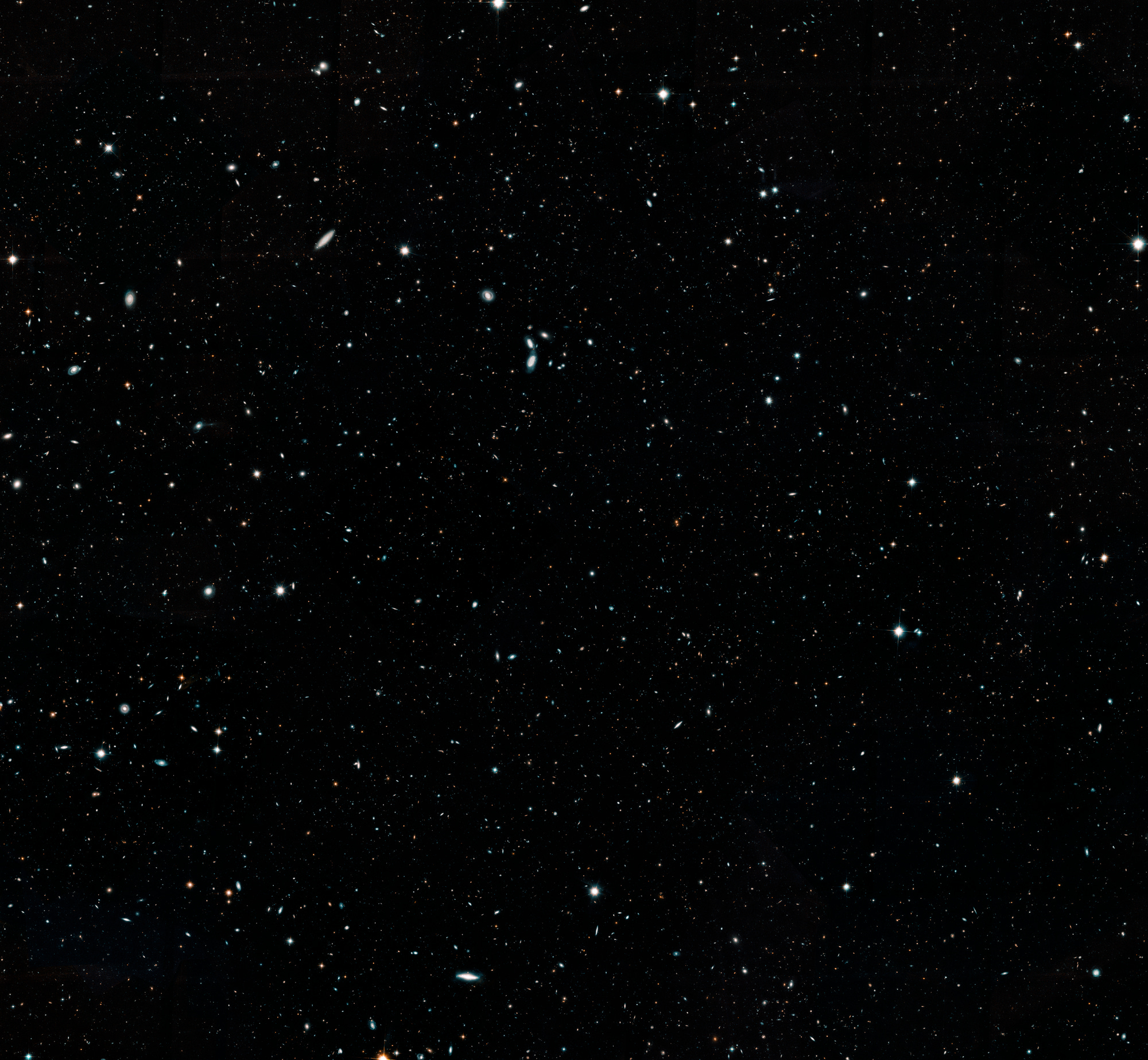
We of course don’t know for sure that there is a winderverse. That’s not the point. The point is, if we can imagine a universe that manages to bring meaning to this one, that manages to change our outlook and minister to our pain, then there is the possibility that such a winderverse (or some other winderverse) might be true. Not that it definitely is, but that it could be. And “could be” alone is a form of hope. Possibility makes it possible for us to keep living, keep hoping, and keep believing.
In telling our own winderverse story, there are a couple of pitfalls we need to keep in mind. A winderverse is a story about the things we don’t know, a story that attempts to include the painful things we do know. We must be honest about the facts of the world we are living in as best we understand them—even the facts that are uncomfortable—and let our storytelling surround that. A winderverse is not going to simply do away with these facts. It is not an excuse to practice denialism or dogmatism and call it hope. On the contrary, a winderverse story makes raw honesty about the nature of the world much more possible, because we are no longer assuming that the existence of darkness precludes all possibility of light. We are encircling facts with possibilities that will make the facts themselves easier to tolerate.
A winderverse is also not a way to condone or justify evil. It is not a way to invalidate our pain or problems in this world. The purpose of a winderverse is not to justify suffering, but to sanctify it. We will talk more about all of this in the future.
My hope is that the Winderverse of my stories will help you imagine something akin to this concept. No, it won’t be perfect. And most likely it will be a little bit too eccentric and fanciful to convince anyone it could be real exactly as is. But if I have done my job well, the Winderverse of my fiction will point you to a greater possibility that you wouldn’t have considered before. A possibility of love, hope, and adventure—a deeper winderverse you’ll catch glimpses of in your heart. That is the goal of Winderverse.
Story About Story actually has a double meaning as well. One, it is a story about story itself, a story about the stories we tell ourselves and each other, and a story about this strange life story we find ourselves in. Two, it is a story about my story Winderverse; it is a way for me to pull back the curtain and show you the meanings behind the metaphors, the ins and outs of the writing process, a backstage tour of a project I will likely be working on for the rest of my life. We’ll be talking about a vast array of topics, including philosophy, meaning, religion, storytelling, writing, mental health, science, politics, history, and much more. The main goal throughout all of this though will be to find the deeper story in the chaos, and more specifically, to find the story that speaks love and winder into our weary lives. That’s what Story About Story and Winderverse are all about.
I’m expecting Story About Story to be a little bit messy. It may likely turn into a dumping ground for many random thoughts, not all of which will connect to each other right away or be fully developed. I have found that when I give myself permission to be imperfect and to embrace some chaos, I write more, and when I get too obsessed with perfection and orderliness, I write less. I’ve also wanted a place to put all of my miscellaneous poems, short stories, and musings that don’t have a home elsewhere yet. This will likely become that home. If you’re interested in finding out what form this strange chaos will take, you may want to subscribe or stick around. Perhaps together we can find a deeper meaning in this mess, and some lovely ways to connect the dots . . .
I also don’t know how long Story About Story will last. Right now, it’s an experimental project aimed at complementing my most important project, Winderverse. If Story About Story ends up competing with Winderverse too much for my time, I will definitely wind this down so I can pivot all of my attention to Winderverse. But I’m hoping instead that this will become a door for me to share my heart and my stories with the wider world. We’ll have to see what happens.
I’m planning to start publishing my Winderverse chapters online on their own websites, so I can start sharing my stories with people as I write them. By embracing a serial format for the stories, I am giving people a chance to see portions of the Winderverse stories years ahead of when I would have otherwise finished and published them. I’m also planning to make all of my writing free for now—hopefully indefinitely. I really don’t want money to be the reason people didn’t read my stuff, and I think I can reach a larger audience if I do things this way. While it would be helpful to make an income off of Winderverse at some point so I can dedicate more time and money to the project, I think the best way to do that will likely be through selling paperbacks and merchandise to people who have already read my stories and have a reason to love them, not by setting up barriers to access. But if I end up in a situation where I have to choose between charging people money for my books on the one hand or failing to complete Winderverse due to insufficient funding on the other, I will of course choose the former. At present I don’t make any significant amount of money from my writing, but I have a separate job that works decently with a writing lifestyle. I don’t think things will stay that way forever, but I’ll cross each bridge as I come to it.
If you’re interested in reading the first couple chapters of my first Winderverse story, go ahead and subscribe to Story About Story and I’ll be sure to let you know as soon as it is up. Winderverse will be published across its own collection of websites that I am building myself, separate from this publication. The first few chapters of my first book, The Winderanium, will be available to read very, very soon. Subsequent chapters of that story and several other Winderverse stories will begin to appear gradually after that as I write them or finish editing them. I’ll be sure to mention new chapters, stories, and other content as they become available. I’ll also be sure to give you the inside scoop on what was going on inside my mind and my heart as I wrote each piece of Winderverse.
As we let ourselves focus deeply on each of these little pieces, one at a time, and as we move away from the Big Answer, my hope is that our eyes will be opened to the good news of the Big Question—the ache, the longing, the love inside of our hearts that remains ever unexplained and unexplainable, yet no less real to us. Love is painful and confusing and strange and desperately beautiful. And it is, I believe, the source of all meaning and winder in the world.